A Snake Hook That Fits In Your Pocket And Extends To 26 Inches
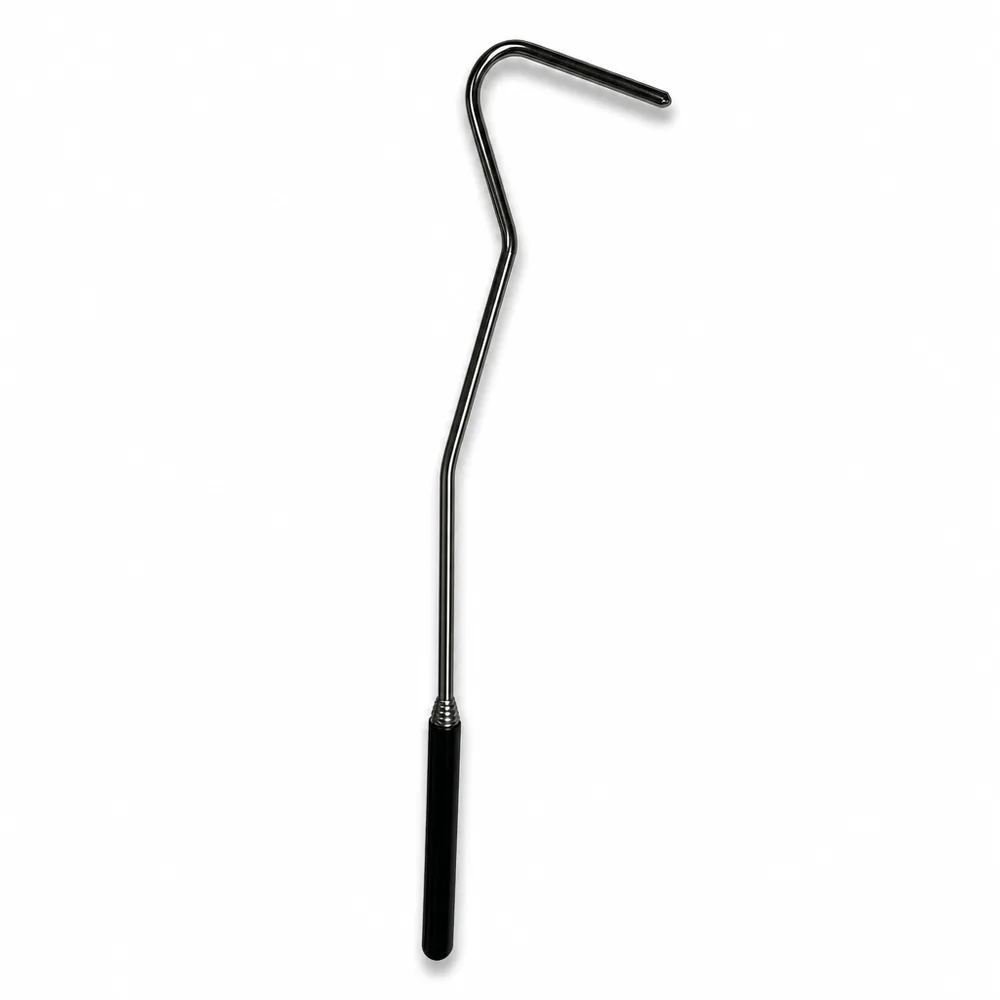
Stainless steel, six telescoping sections, one curved head. It collapses to the length of a pen and opens to keep your hands well clear of the animal.
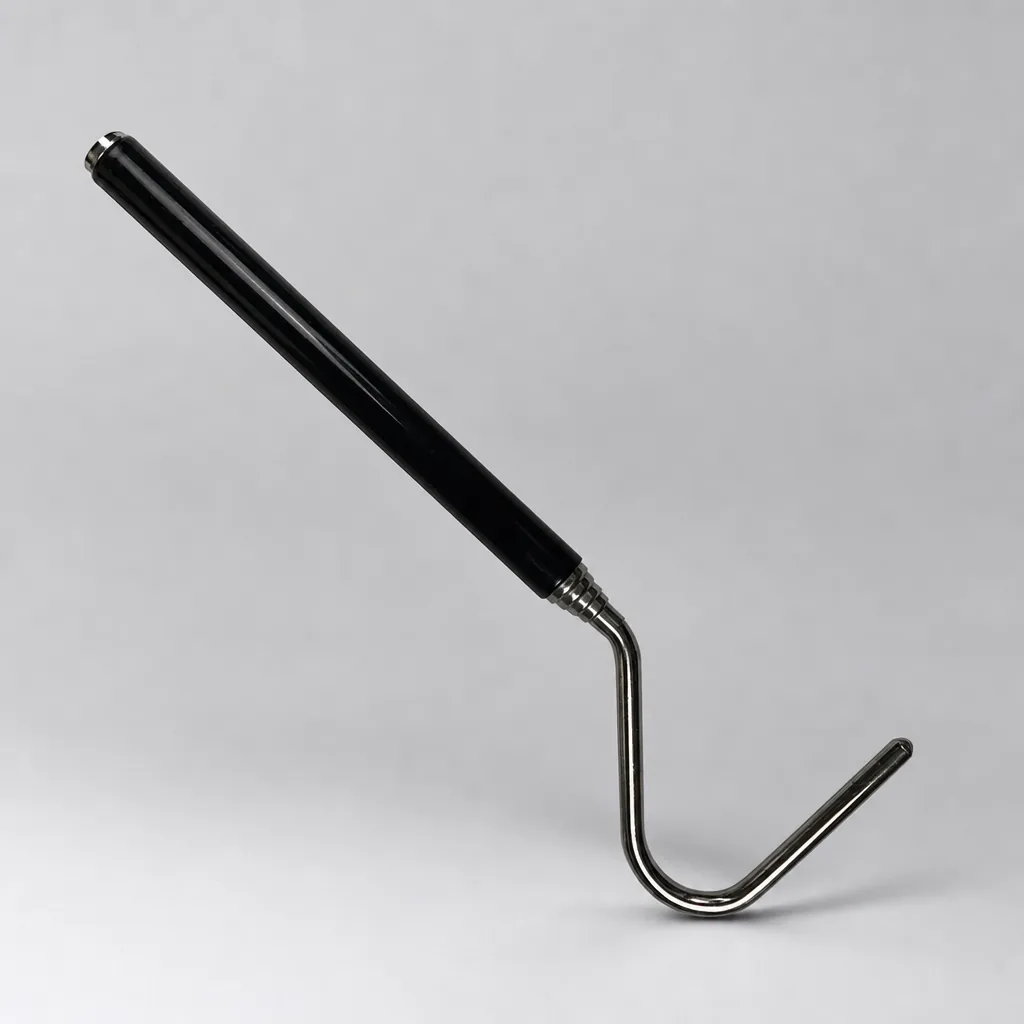
The tool exists so the snake never has to be grabbed
Every keeper learns the same lesson eventually, usually the hard way. A snake that is calm in its enclosure is a different animal when a hand comes through the door. Ball pythons that have never so much as huffed will strike a warm hand during feeding week. Colubrids that are perfectly tame in the living room turn into a knot of muscle when they are cornered in a rack. None of that behaviour is aggression. It is a small animal reading a large one, and reacting the way natural selection taught it to.
The hook interrupts that read. When something cool, thin and inert slides under the middle of the body, the snake gets no heat signature, no grip and no threat to respond to. In practice it usually does nothing at all: it lifts, it balances, it moves. That is the entire point of the tool. You are not restraining the animal, you are giving it a branch that happens to be going where you want it to go.
The second reason to own one has nothing to do with the snake and everything to do with the handler. Reaching into a dark enclosure with your fingers first is how keepers get tagged during feeding response. Reaching in with a hook first is how they find out the animal is on the other side of the hide before their hand follows. A hook is a cheap habit that saves a lot of blood and a lot of trust, and once you have used one for a week you stop wanting to work without it.
There is a third argument that people discover later, and it has to do with the snake's opinion of you. An animal that only ever meets a hand when it is being lifted starts treating hands as the thing that happens before something unpleasant. An animal that meets a hook first, and only then a hand once it is calm and out of its enclosure, learns to separate the two. Keepers with large collections build their whole routine around that distinction, and it is why hooks outsell every other handling tool in the hobby.
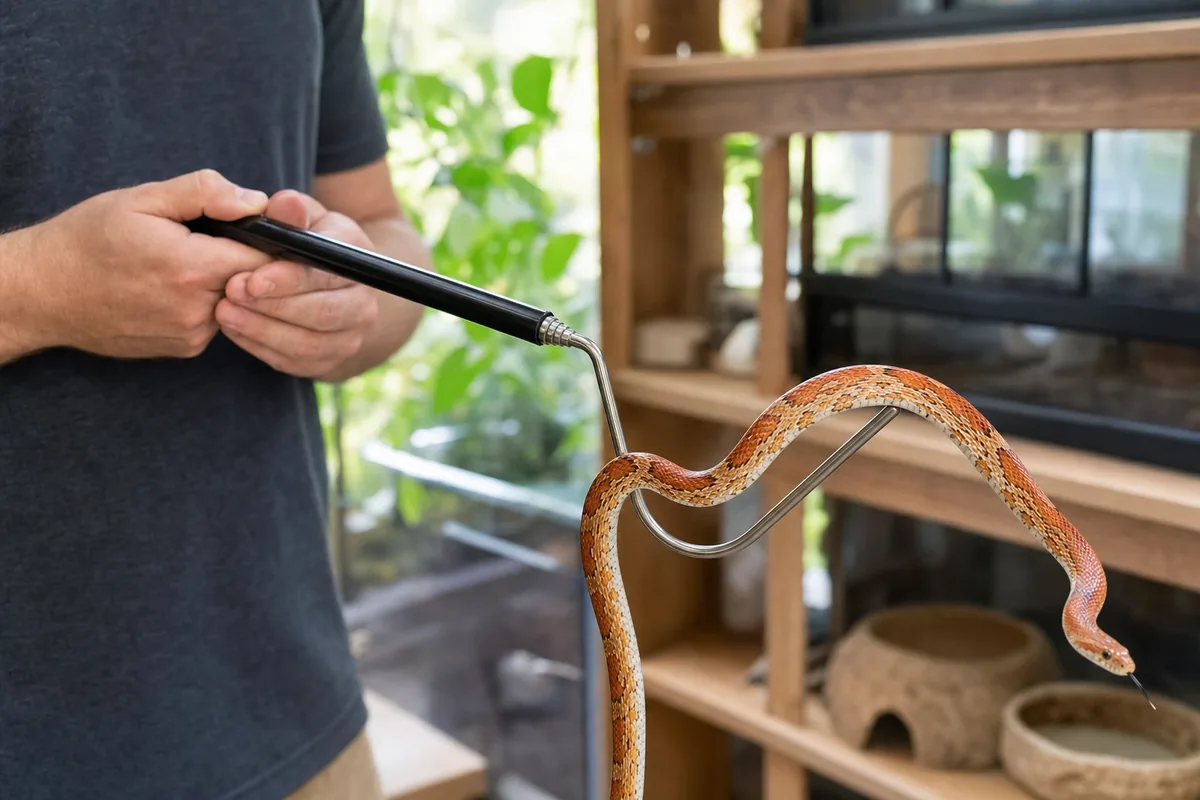
Three reasons this hook earns its spot in the bag
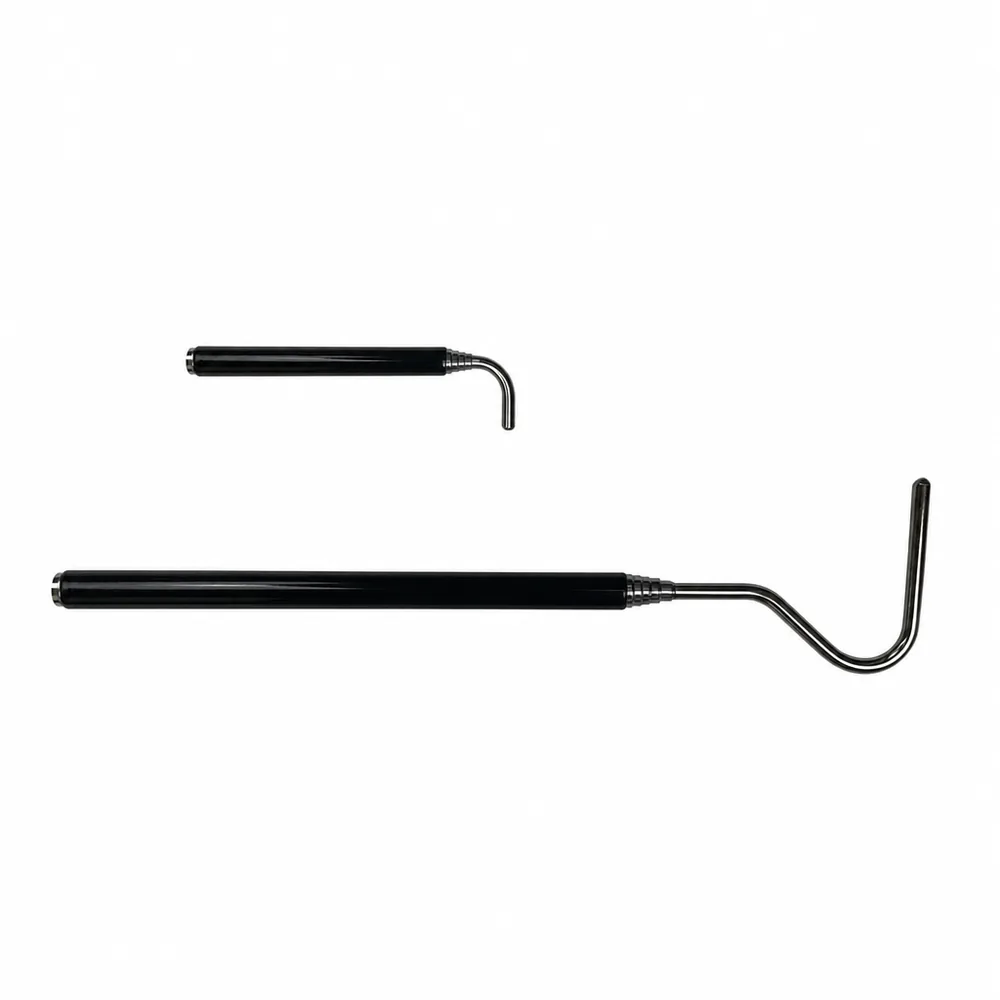
Six sections, 7 to 26 inches
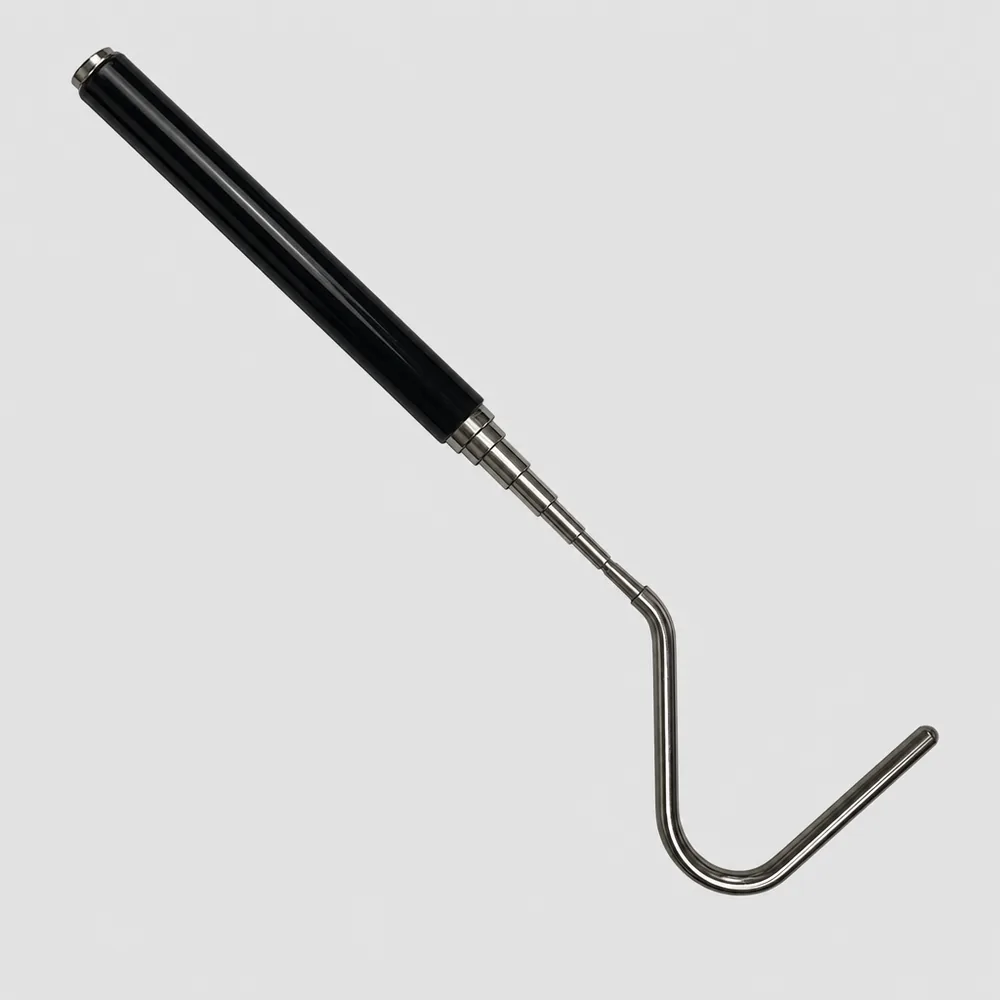
The stainless shaft telescopes through six sections, from 7 in (18 cm) collapsed to 26 in (66 cm) extended, and holds by friction at any length in between.
Short for a hatchling tub on a shelf. Long for a defensive adult at the back of a rack. You are not choosing one fixed length and living with it for every animal you own.
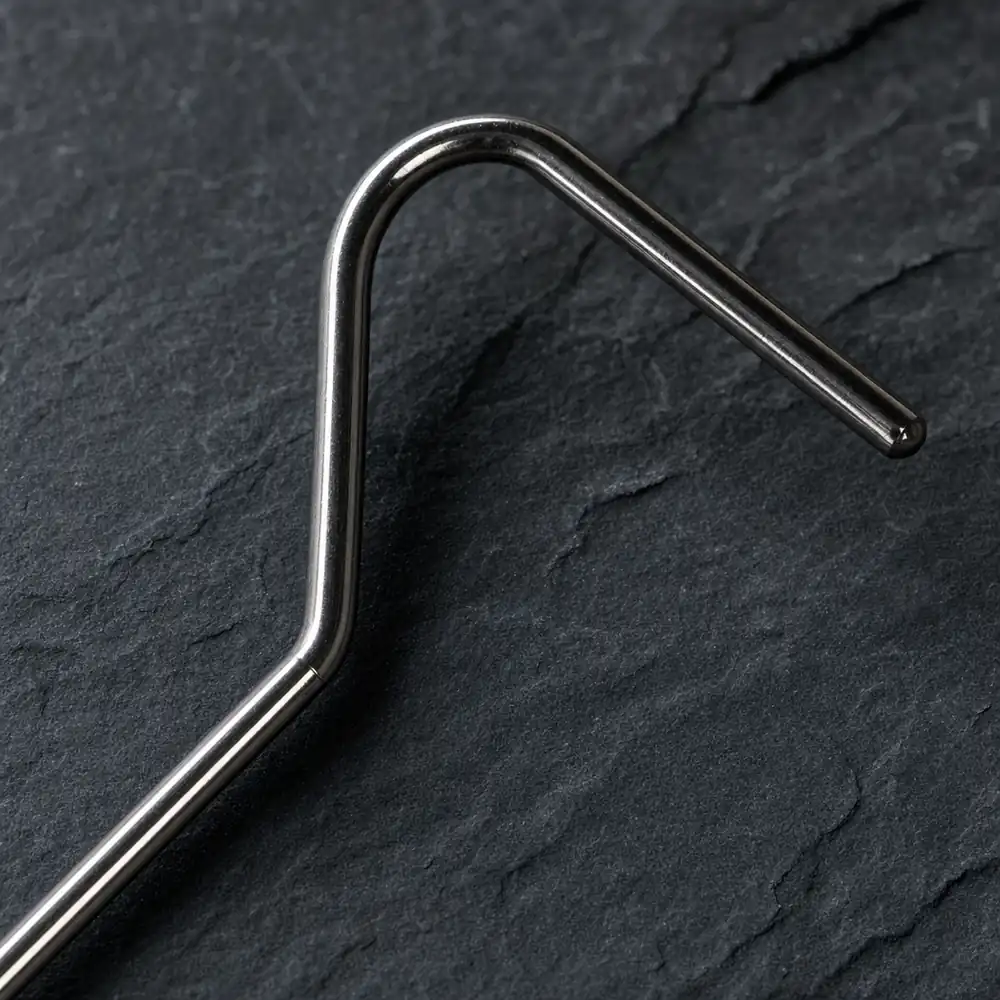
A head shaped to carry, not to catch
The curved head measures roughly 1.8 by 2 by 2.2 in (4.5 by 5 by 5.5 cm): wide enough for a body to rest across it, shallow enough that nothing gets trapped in the bend.
Deep, narrow hooks pinch. Flat ones let the animal pour straight off. This bend sits between the two, which is what you want for the small and mid-size snakes it is built for.
It collapses, so it actually comes with you
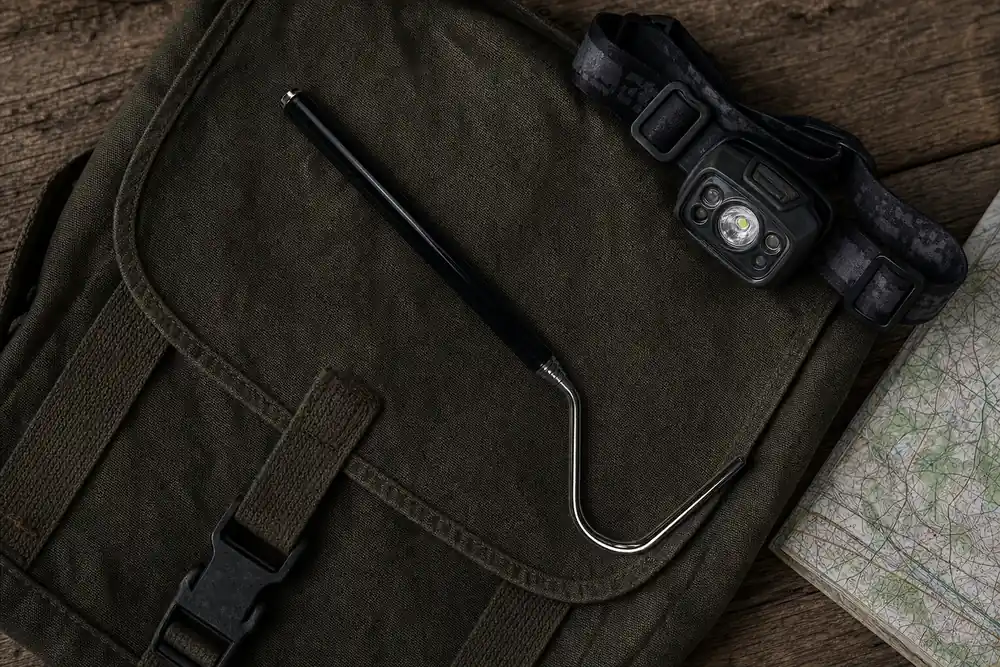
Closed, the hook is about 7 in long with a black gripped handle. It rides in a jacket pocket, a glovebox or a camera bag without a case.
The best hook is the one you have on you when a snake turns up on a road at dusk. A 40 in fixed shaft stays in the garage. This one does not.
Which snakes this hook handles, and where it stops
Most listings for compact hooks say "for snakes" and leave you to find the limit yourself. We would rather draw the line in public. Below is where a 26 in telescopic hook with a 1.8 in bend is the right tool, where it is workable with care, and where you should be holding something heavier. It is built from the head geometry, the shaft diameter and what buyers report using it on.
| Animal | This hook | What to use instead |
|---|---|---|
| Hatchlings and juveniles, any species | Ideal, short setting | — |
| Corn snakes, kingsnakes, milk snakes | Ideal, full extension | — |
| Ball pythons up to about a year | Ideal, confirmed by a buyer | — |
| Adult ball pythons and small boas | Workable, support with a second hand | A full-size fixed hook |
| Adult boas, burms, retics | Not enough shaft or bend | Heavy hook plus a second handler |
| Any venomous species | No | Trained protocol, long tools, professional help |
Why handling distance is worth twenty-five dollars
venomous snakebites reported in the United States each year, with about 5 deaths
— Centers for Disease Control and Prevention, 2024
of media-reported US snakebites came from purposefully handling the snake rather than an unseen encounter
— Curry et al., Wilderness and Environmental Medicine, 2016
list price of a professional-tier titanium snake hook, for comparison
— Professional-tier retail listing, 2026
Those first two numbers are why the venomous answer in our FAQ reads the way it does. Roughly a third of bites happen because someone decided to pick the animal up. A hook is a tool for moving snakes, not a licence to handle species you are not trained for.
How a snake hook compares to the other handling tools
| Tool | What it does | Pressure on the animal | Price here |
|---|---|---|---|
| Snake hook | Supports and steers the body | None, the snake rests on the bar | $24.95 |
| Snake tongs | Grips and lifts from a distance | Controlled, jaw pressure applied | $49.95 |
| Grab stick or trash picker | Grips, hard jaws, no spring control | High, not designed for animals | Not sold here |
| Bare hands | Everything, badly | Maximum stress, maximum risk | Free, and the most expensive |
The version is that the hook is the tool you use ninety percent of the time and the tongs are the tool that saves the other ten. A hook cannot reach a snake wedged behind a water heater, cannot draw one out of a woodpile, and cannot lift an animal that has anchored itself around something solid. That is what a pair of folding tongs is for: they grip where a hook can only support, and they fold to 17 in for the bag. It is why the tongs page exists and why the bundle is priced the way it is.
Only 32.1% of bites were deemed illegitimate bites that resulted from the purposeful handling of the snake.Curry, Bond, Kunkel et al., "An Analysis of Media-Reported Venomous Snakebites in the United States, 2011-2013", Wilderness and Environmental Medicine, 2016
Four rules that cover almost everything
Come in under the middle third. Slide the head beneath the body roughly halfway along, never near the head and never at the tail. From the middle, the animal balances and can adjust its own weight. From either end it hangs, panics and tries to escape by whipping toward the other end of the bar.
Lift slowly and let the snake settle. A snake that feels the ground disappear will keep moving until it finds purchase. Give it two or three seconds on the bar before you go anywhere. Most animals stop moving entirely once they realise the hook is stable.
Use the hook to open the door, not just to lift. Tapping the shaft on the substrate before you reach in tells a feeding-response animal that this is not dinner. Keepers call it hook training, and it does more for daily safety than any other habit on this page. Our technique guide covers it step by step.
Know when to put it down. If a snake is coiled tight around a branch, wedged behind something, or heavy enough that it bends the shaft, the hook has finished doing its job. Reach for a second hook, a second person, or tongs. Forcing a hook past its range is how animals get dropped.
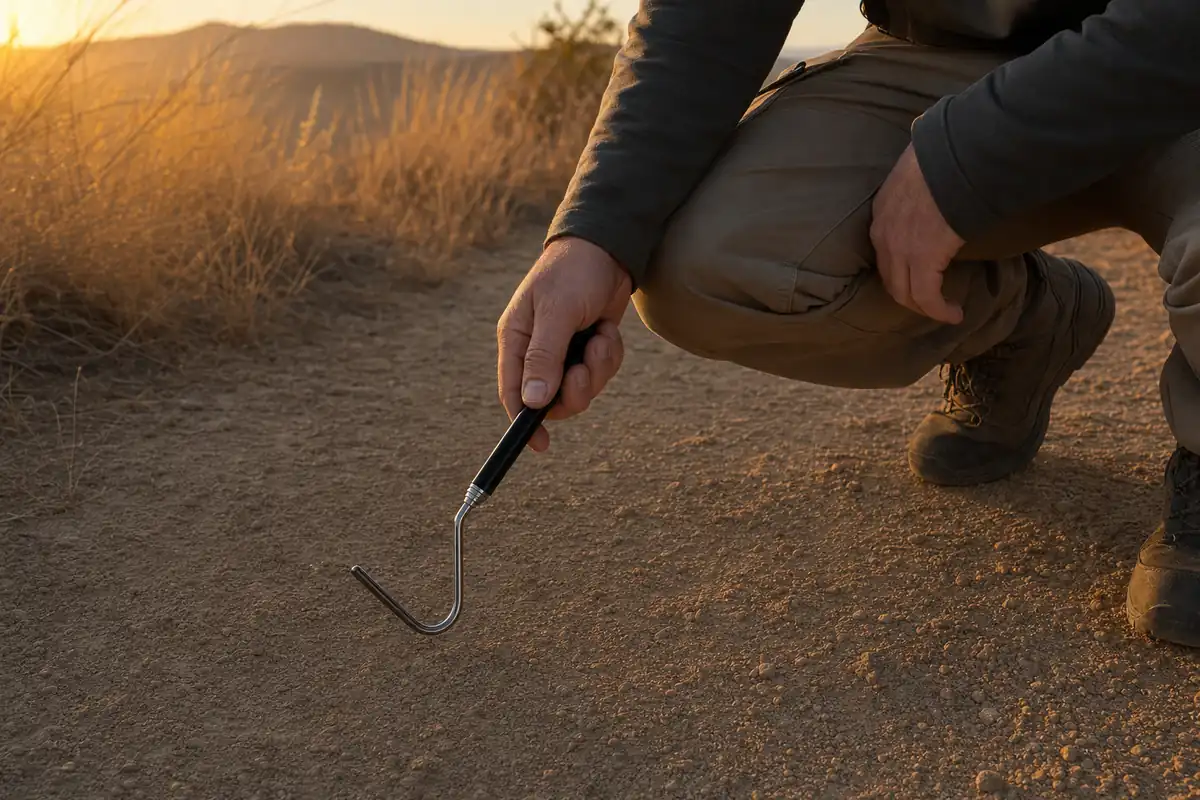
Everything above applies to a $25 hook and a $200 one identically. Technique is what keeps the animal calm and your hands intact; the tool only decides how far away you can stand while you use it. That is worth remembering before anyone talks you into a titanium shaft as a substitute for practice.
What you actually receive
| Spec | Value |
|---|---|
| Material | Stainless steel shaft and head, black gripped handle |
| Length collapsed | 7 in (18 cm) |
| Length extended | 26 in (66 cm) |
| Sections | 6, friction hold at any intermediate length |
| Head dimensions | Approx. 1.8 × 2 × 2.2 in (4.5 × 5 × 5.5 cm) |
| In the box | 1 telescopic snake hook |
We list only what the spec sheet documents. If a spec is missing from this table it is because we could not source it, not because it was left out for effect.
Verified buyer ratings
"Good for python hatchlings up to a year old."
Verified buyer · April 8, 2026 (translated)
Rated 5 out of 5, no written comment.
Verified buyer · October 21, 2025
Rated 5 out of 5, no written comment.
Verified buyer · June 4, 2026
Verified reviews. The full list is on the reviews page.
Snake hook FAQ
What is a snake hook used for?
A snake hook lifts and steers a snake without touching it with your hands. Keepers use it to move animals out of an enclosure, to guide a defensive snake into a tub, and to signal that feeding time is over. Field herpers use it to lift a snake for identification and to move one off a road. The hook supports the body, it never pins or grabs it.
How long should a snake hook be?
For enclosure work with colubrids, boas and pythons, a 20 to 26 in hook keeps your hands clear while staying manoeuvrable indoors. Longer hooks of 40 in and up exist for venomous work at a distance. This hook extends from 7 to 26 in, so it covers routine keeping and collapses to pocket length for transport.
Will a snake hook hurt the snake?
Not when it is used correctly. The hook slides under the middle third of the body and lifts, so the snake balances across the shaft with its weight spread out. What causes injury is hooking near the head or the tail, dragging the animal along a surface, or lifting a very heavy snake on a single point instead of supporting it with a second hand or a second hook.
Is this hook strong enough for a big constrictor?
It is a compact hook, and we sell it as one. The stainless shaft handles a hatchling, a juvenile, a corn snake or a young ball python comfortably. For an adult boa or a retic, use a full-size heavy hook and a second person. One of our buyer reviews puts it plainly: it is good for python hatchlings up to about a year old.
What is the difference between a snake hook and snake tongs?
A hook supports and steers, tongs hold and lift. A hook is the everyday tool because it never applies pressure to the animal. Tongs are what you reach for when the snake has to be removed from somewhere a hook cannot reach: under a shed, behind a water heater, in dense brush. Most keepers who also work outdoors end up owning both.
Should I use a hook on a venomous snake?
Not with this hook, and not without training. Venomous handling is a trained discipline that uses long hooks, tongs, tubes and a second person, and it is regulated in many states. If a venomous snake is in your home or yard, call your local animal control or a licensed removal service instead of buying a tool and improvising.
How long is shipping?
Orders are processed in 1-2 business days and delivered in 6-10 business days, with free shipping on every order. You receive a confirmation email right after checkout and a tracking number as soon as your order ships.
What if it is not for me?
Every order is covered by a 30-day money-back guarantee. If the hook is not what you expected, contact us within 30 days of delivery and we refund you. Details are on our refund policy page.
Herpaxe exists because the handling tools available to hobbyist keepers split into two piles: professional gear priced for animal control departments, and unbranded sticks with no published dimensions at all. We sell the second kind with the first kind's honesty, which means real measurements, a stated size limit, and a page that tells you when to buy something else. Start with the hook, add the tongs when your snakes outgrow it, and read the catching guide before the first time one turns up somewhere it should not be.